Nottingham to Nashville: what 40,000 miles taught me about studying abroad
Angel is an alumna of the FEA’s Youth Steering Group. In this article she shares her experience of studying at Vanderbilt University in the USA with the Sutton Trust Fulbright US Programme.
A World Beyond UCAS
Growing up in Nottingham, I always imagined what it would be like to live abroad. America fascinated me. My understanding came from films, novels and stories online, but in my wildest dreams I did not consider that studying in the States was a real possibility. Everything changed when I discovered the Sutton Trust Fulbright US Programme. For the first time, I realised there was a world of opportunities beyond UCAS.
Applying became the first time I truly bet on myself.
By then, I had spent years saying yes to opportunities. I had served on the Nottinghamshire Youth Crime Commission, represented young people through the Fair Education Alliance Youth Steering Group, become Student President at Bilborough College, directed documentaries, organised community book drives and proudly won Miss Teen Nigeria UK. Each experience shaped who I was, and through the Sutton Trust I realised they were exactly the kinds of experiences American universities valued.
Being accepted onto Cohort 13 completely changed the trajectory of my life.
From the very beginning, I found myself surrounded by some of the most inspiring young people I had ever met. Entrepreneurs sat beside athletes. Creatives exchanged ideas with scientists. Campaigners, musicians, chess champions and future doctors all brought different perspectives, yet we shared one thing in common: we believed in aiming high.
Instead of wondering whether I belonged, I began wondering how far I could go.
Through residentials, mentoring and unforgettable experiences, including living at Yale University and visiting Harvard University, I discovered an entirely different way of thinking about higher education.
The Room Where It Happened
Every conversation, every workshop and every campus visit expanded my understanding of what university could be. The process became about far more than writing an application. It became about discovering the version of myself I wanted to become.
I still remember opening my Early Decision admissions portal.
For a few seconds, I simply stared at the screen.
Then it sank in.
I was going to America.
For the first time, I felt like every part of who I was mattered, not just what I achieved in an exam hall.
I will always be grateful to the Sutton Trust and the Fulbright Commission for believing in young people like me and creating opportunities that transform lives. Their support helped me see that talent exists everywhere, and that with the right guidance, ambition can travel much further than you ever imagined.
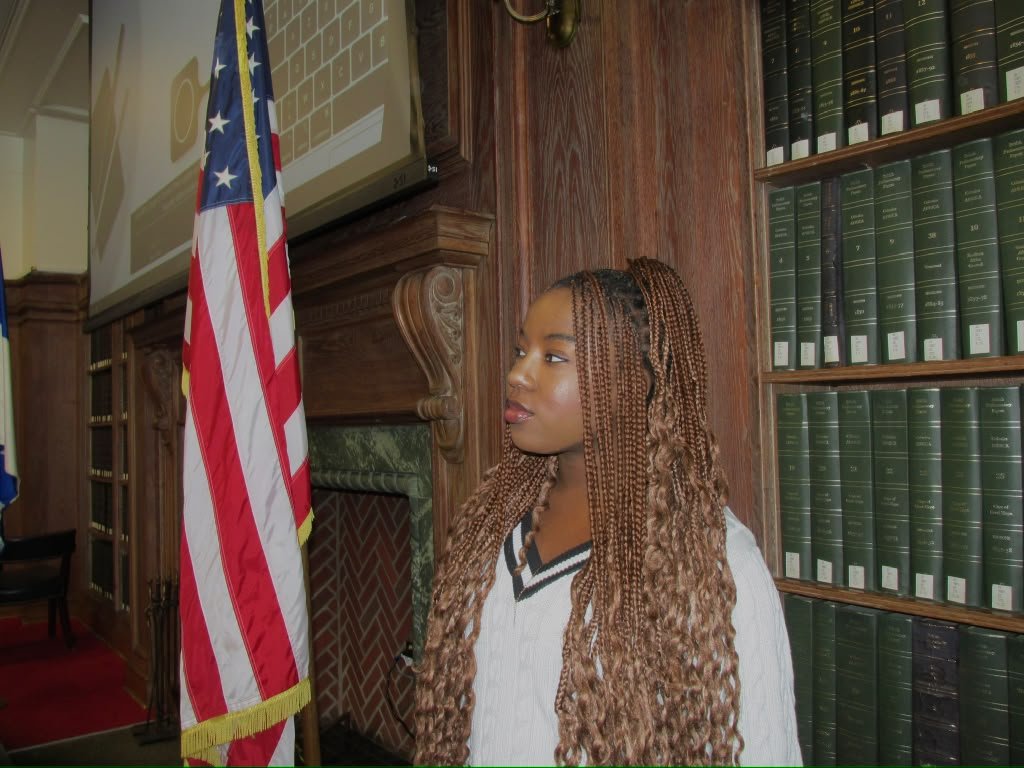
Life, Liberty and the Pursuit of Purpose
One of the biggest differences I noticed was the American liberal arts system. Unlike the UK, where students usually specialise early, I’ve had the freedom to explore subjects across different disciplines before deciding exactly where I want to focus. That’s exactly why I chose to study in America. I loved policy, but I also wanted the freedom to explore everything else I was curious about.
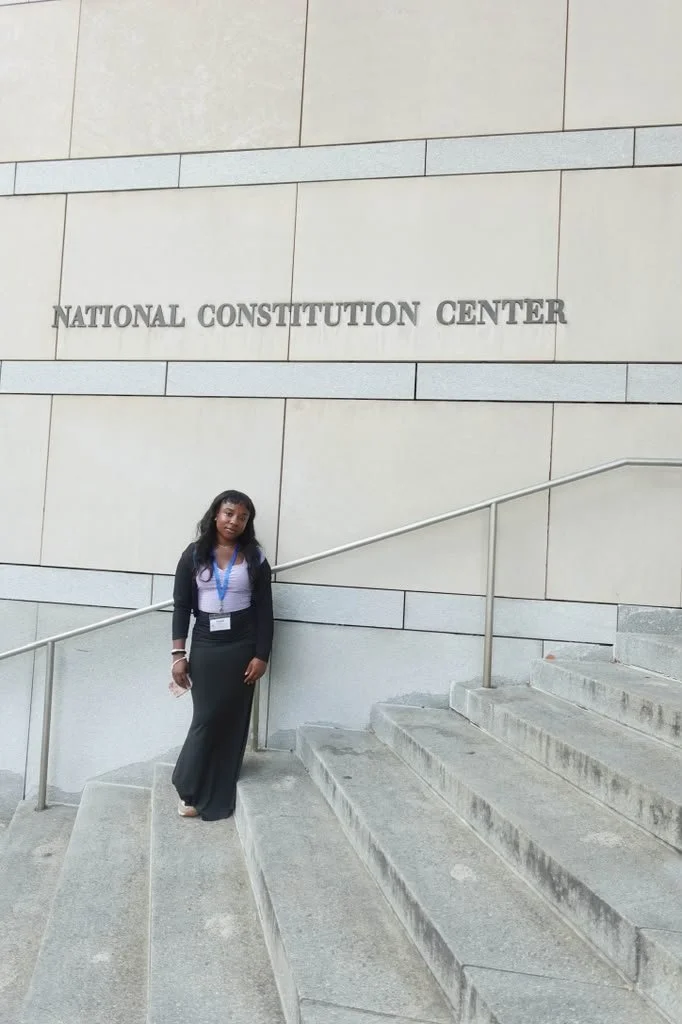
I’ve taken classes I never imagined would exist, from Beyoncé as a Feminist Icon to Free Speech and Dangerous Ideas. A class on the history of rap and hip hop even led to a summer internship at the Venice Biennale. My university has also given me opportunities to create documentaries and travel to cities including Chicago and Washington, D.C. to explore American history, politics and business.
Learning quickly extended far beyond lecture theatres. I fell in love with small seminar discussions, where students from different disciplines, backgrounds and walks of life challenged one another’s ideas with curiosity and respect. Some of the best conversations didn’t end when class finished. One question often became ten more, and I left many seminars still thinking about them hours later.
The Cost of Starting Over
As beautiful and exciting as my freshman year was, there are a lot of things I wish I could change. Oscar Wilde famously wrote, “Experience is the name everyone gives to their mistakes.” Looking back, every awkward interaction, misunderstanding, conversation that got lost in translation and moment where I felt out of place became another lesson in building a life thousands of miles from home. Those experiences taught me just as much as any lecture, seminar or assignment ever could, teaching me as much about America as they did about myself.
One of the hardest parts of studying abroad was letting go of the life I’d left behind and embracing the one I was building in the United States. I assumed that because we spoke the same language, adapting would be relatively straightforward.
What I didn’t realise then was that speaking the same language doesn’t mean sharing the same culture. I spent too much time trying to make America feel like the UK instead of letting it be its own place. It wasn’t just the friendships that were different. It was the way people communicated, the humour, the slang, the classroom discussions and even the small everyday interactions that you never think about until they’re different. There were moments when it genuinely felt like we were speaking different languages. Americans would ask me to explain words or expressions I’d used without thinking, while I often found myself completely lost when they used slang or cultural references I’d never heard before.
Only with time did I realise that I had been measuring every new experience against an old one. I was looking for familiarity when I should have been looking for understanding. Instead of assuming something was strange because it wasn’t what I knew, I started asking why it was different. That simple shift transformed my experience.
The same was true academically. At first glance, the American education system seemed less demanding than what I had been used to in the UK. I couldn’t have been more wrong. The challenge wasn’t concentrated in one or two high-stakes exams. It was spread across every week through discussions, presentations, readings, projects, participation and continuous assessment. Different didn’t mean easier. It simply required a different way of learning.
Beyond the Brochure
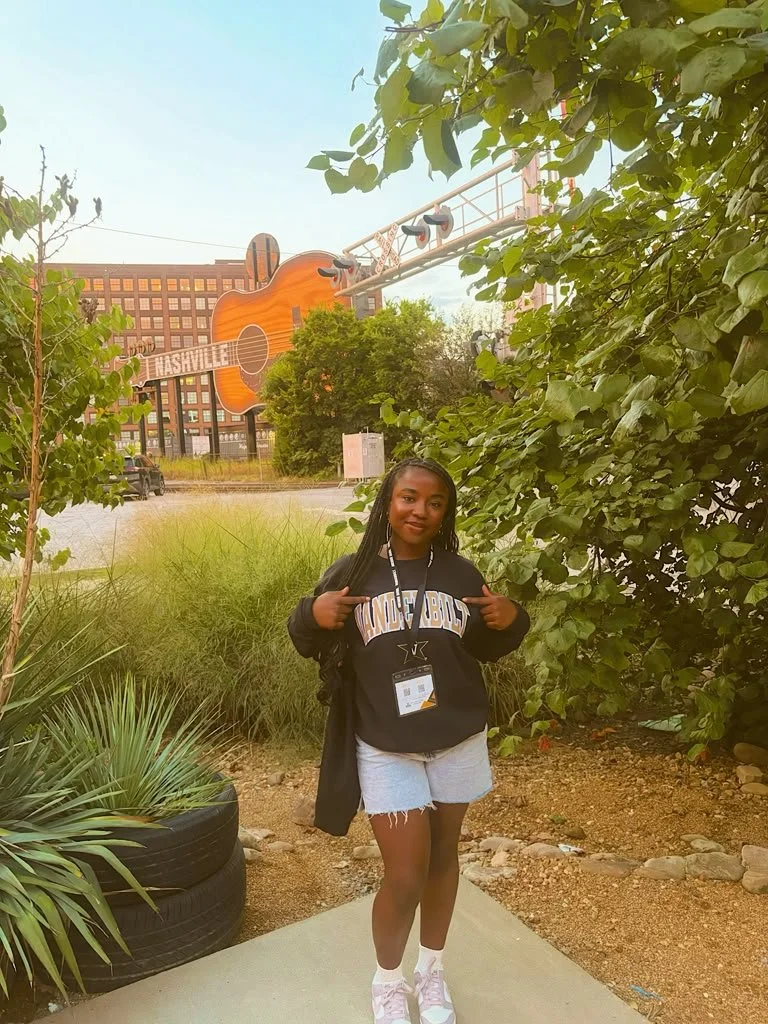
At my university, I’ve become involved in different student organisations, where I’ve learnt so much about African American history and culture by attending campus events, listening to people’s stories and taking part in conversations that have broadened my understanding of American society. Living in the South has introduced me to line dancing, homecoming, college football, fraternities and sororities, traditions I’d only ever seen in films growing up. Next year, I’ll even be joining my university’s Spirit Squad.
The movies are true, people. I’ve been serenaded by an a cappella group, spent Saturdays at football tailgates, dressed up for formals, celebrated homecoming and realised that a Division I university experience really can feel like the movies.
The Architecture of Belonging
But the moments I’ll remember forever aren’t always the biggest ones. They’re packing my life into two suitcases and travelling for ten hours to my new home.
They’re the conversations after class that somehow last for hours because one question turns into another.
They’re the pure bliss of meeting another Brit in America and instantly laughing about tea, meal deals, scones and how many times we’ve both been asked whether we know the Royal Family.
Those are the moments that made America feel less like somewhere I was studying and more like somewhere I was living.
Moving to America has also made me think a lot about my upbringing and about the extraordinary people I met growing up. Some were incredibly gifted artists. Others were talented footballers, athletes, musicians, entrepreneurs and leaders. They had the talent, determination and work ethic to achieve extraordinary things. It makes me wonder how much where we’re born shapes not just the opportunities we’re given, but the opportunities we believe are possible.
That question has stayed with me because it’s much bigger than my own story. The Sutton Trust often talks about the opportunity gap: the idea that talent is spread evenly across society, while opportunity is not. Its research consistently shows that a young person’s background continues to influence access to enrichment activities, highly selective universities and future careers. Living abroad has made me realise that opportunity isn’t just about ability. It’s also about exposure. The people we meet, the examples we see and the information we have access to all influence what we believe is possible for ourselves.
That’s one of the reasons the Sutton Trust US Programme matters so much. Since launching in 2012, it has supported more than 1,500 students from state schools and underrepresented backgrounds across the UK. Students have collectively secured more than $155 million in financial aid from American universities.
The Land of Opportunity?
One of the biggest differences I noticed between higher education in the UK and the United States is the way universities recognise potential. Alongside academic achievement, many American universities also consider leadership, volunteering, creativity, work experience, community involvement and sport. Looking back at my own application, I realised it wasn’t simply about my grades. It was the story of everything I’d chosen to get involved in and everything I’d learnt from those experiences.
I did track throughout my childhood in the UK, so I couldn’t help wondering how different that experience might have been if I’d grown up in the United States. American universities invest heavily in college sport, with the NCAA supporting more than 500,000 student athletes every year, and many universities offering athletic scholarships alongside academic scholarships and need based financial aid. It made me think about the talented athletes I grew up with in Nottingham and how many opportunities could exist if different kinds of talent were recognised in different ways.
I could say exactly the same about filmmaking, entrepreneurship, music and the arts. Since moving to America, I’ve met people who openly talk about starting businesses, directing films, carrying out research or creating something completely new. Those conversations made me realise how much the people around us influence the ambitions we have for ourselves. When you’re surrounded by people who believe big ideas are worth pursuing, you slowly start believing it too.
A Journey That Doesn’t End at Graduation
That’s one of the greatest things studying abroad has given me. Not a different personality, but a bigger sense of what’s possible.
America has expanded my mind in ways words cannot express.
It has given me friends from all around the world. It has taught me independence through packing my life into two suitcases and building a home on another continent. It has shown me that some of the biggest opportunities begin with one conversation, one application or one person who believes in you before you fully believe in yourself.
When I boarded a plane from London, I thought I was travelling across the Atlantic to earn a degree. Looking back, I realise I was also saying yes to opportunities, experiences and friendships that have changed the way I see the world. I still don’t know exactly how much where we’re born shapes our future, but I do know this: one opportunity can change the direction of a life. The Sutton Trust US Programme did that for me, and I hope more young people realise that opportunities like this exist for them too.
Could Your Future Be Abroad?
Here are a few things I hope every young person knows.
Give yourself a chance. Don’t rule yourself out before a university has the chance to say yes.
Studying abroad isn’t only for wealthy families. Research financial aid, merit scholarships and fully funded opportunities before assuming it’s out of reach.
Keep an open mind. The right opportunity might not be in the country, city or university you first imagined. Summer schools, exchange programmes, internships, research opportunities and full degrees can all open unexpected doors.
Research early. The strongest applications are rarely built overnight, and many universities look beyond grades, valuing leadership, creativity, entrepreneurship, community impact, work experience and sporting achievement.
Don’t confuse prestige with fit. The best university for you is the one that will challenge you, support you and give you the freedom to grow.
Speak to people who’ve done it before. One conversation can introduce you to opportunities you might never have discovered on your own.
Your postcode shapes where you begin, not where you can go.