
Jobs for Tomorrow: a thematic collaboration from the Fair Education Alliance
Why jobs for tomorrow matter
There is already significant inequality in access to employment. Young people from low-income households are twice as likely to be not in education, employment or training (NEET) than their peers.
At the same time, the world of work is changing rapidly. Advances in technology – particularly the acceleration of AI and digital tools – are reshaping the skills young people need to succeed. Yet too many young people are leaving education without the essential skills, experiences, or opportunities required to navigate this changing landscape.
Without deliberate action, these shifts risk deepening existing inequalities. Young people from low-income communities are less likely to attend schools with the capacity to adopt new technologies fully, or to access the enrichment, guidance and networks that open doors to future opportunities.
This work directly supports:
Fair Education Priority Three: Prepare young people to contribute to tomorrow’s world
Impact Goal 4 – Close the gap in essential skills
Impact Goal 5 – Close the gap in education, employment and training.
If all young people are to thrive in the future labour market, preparation for work cannot be left to chance.
To explore the evidence and policy recommendations behind this work, read the Fair Education Alliance’s 2025 Report Card.
How we are approaching it
Through the Jobs for Tomorrow thematic collaboration, we focus on the barriers faced by young people from low-income households throughout childhood and adolescence that limit their ability to thrive in later life.
We believe a step change is needed – not only in how young people are prepared for work, but also in how employers are supported to recognise, value and nurture talent from all backgrounds.
Our work centres on three connected areas:
Building essential skills for life and work
We support efforts to ensure all young people develop the essential skills they need to succeed, across education, employment and enrichment. This includes promoting consistent, evidence-informed approaches to skills development and a shared language that connects learning inside and outside the classroom.
Responding to the opportunities and risks of AI
AI and technology have the potential to transform opportunity – but only if access to skills and tools is equitable. We are particularly focused on addressing the risk that AI could exacerbate existing inequalities, while supporting approaches that enable young people from all backgrounds to benefit.
Connecting education, employers and communities to collectively advocate
Preparing young people for work requires stronger connections between schools, colleges, employers, communities and young people themselves. We work to build relationships across these groups to better understand what is needed – and what needs to change.
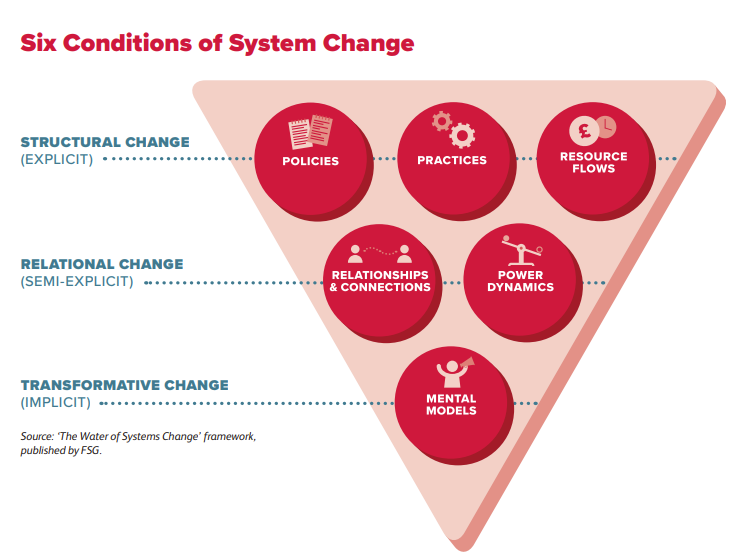
A systems-change approach
As with all our thematic collaborations, this work looks beyond individual programmes.
We examine the policies, practices, resource flows, power dynamics and mental models that keep inequalities in place, and act collectively to shift them. This includes:
Influencing government policy
Supporting changes in organisational and local practice
Influencing where resources are directed
Challenging narratives and assumptions about young people, skills and work
Jobs for Tomorrow: Place-based Collaboration Partnerships

West Midlands
Focused on post-16 destinations and developing an understanding of what has the greatest impact, resulting in more effective resourcing and delivery to improve outcomes for children and young people.
South Yorkshire
Co-designing fairer, more connected systems across education, skills, and employment - creating stronger opportunities for young people as they move through school and into the future.

What’s happened so far
This strand is at an earlier stage of development than some of our other thematic collaborations, but strong foundations are in place.
So far, this has included:
Drawing together evidence and insight through the Fair Education Alliance Report Card.
Engagement with members working across skills, youth employment and employer engagement.
Identifying shared challenges and priorities for future collaboration.
This page will continue to develop as the work progresses.
What’s next – and how to get involved
Over the coming period, we will focus on shaping the direction of this collaboration, informed by evidence, member insight and young people’s experiences.
Get involved:
Register to join the Jobs for Tomorrow collaboration as an FEA member
Share insight or evidence from your work with young people
Help shape priorities for this emerging collaboration
Contribute to collective advocacy and systems change
Explore opportunities to collaborate across sectors